
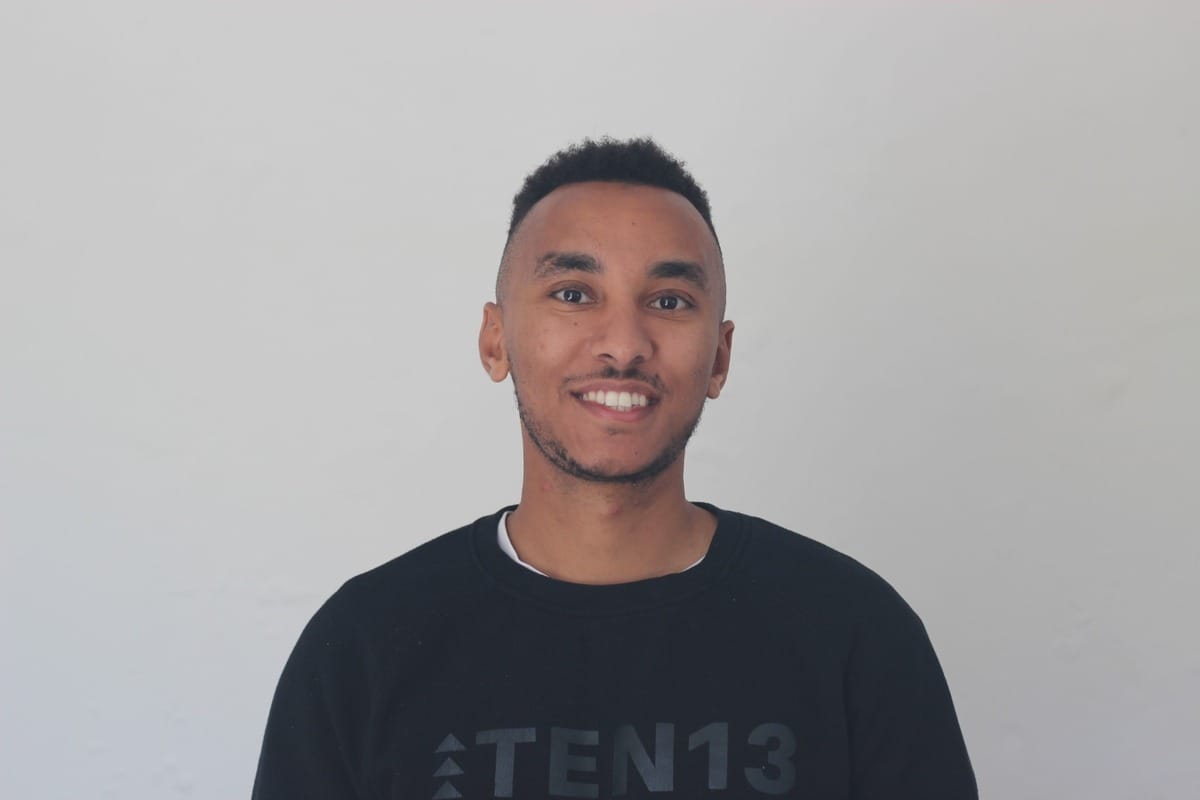
Hey 👋
Caleb here, and I’ve got something new.

Last October, Tech Safari ran an experiment.
We launched a programme to help a small group of Africans abroad to work on problems in Africa.
Within 10 days, we received 225 applications from domain experts.
From that group, we picked six and put them through the programme.
A month later, we put them in front of investors and partners to showcase their MVPs.

Last October, we hosted the Building Back Home event at the Africa Centre in London. Source: Tech Safari
We called it Building Back Home.
And at the end of it, one of the fellows decided to leave his job and move back home, because he had proved his idea.
Our experiment gave us lots of insights.
But the biggest one was clear: Africa’s diaspora is ready to build in Africa.
They just need the right resources and backing.
Now, you might be wondering why we even did this in the first place.
It’s because…
Africa’s diaspora is key to its future
In 2023, I started Tech Safari with a mission to tell Africa’s tech story to the world.
The world listened.
But a big chunk of the listeners weren’t sitting in Kenya, Nigeria, or South Africa.
They were in the UK, the US, and Europe.
Many of them were the African diaspora. They live and work abroad, but thanks to their identity, they maintain strong ties with Africa.
Before starting Tech Safari, I was one of these people.
I’m originally from Ethiopia, but grew up in Australia and moved back to Kenya to build Tech Safari.

Me with my bags packed on my last day in Australia, three years ago. Image Credit: Yours Truly
Since then, Tech Safari has hosted many events across the world.
Some of our biggest events are in these countries: the UK and the US.
And our attendees are heavily diaspora.

Our third event in DC. Over 100 people attended, mostly diaspora.
Every year, the African diaspora sends billions of dollars back to the continent, and in 2024, they sent $95 billion back.
They’re Africa’s most reliable source of external capital.
But all that money is reactive.
It responds to emergencies, covers hospital visits, and helps with unexpected costs.
It’s life support for the continent, but it doesn’t create prosperity. And diaspora has so much more to give than just money.
They have global experience, skills, and networks that are barely being tapped for Africa.
So, we thought, what if instead of money, Africa’s diaspora contributed their skills?
It turns out, we’re not the first to have this idea.
Reverse migration builds countries
In 1992, the Chinese government created a small city dedicated to science and technology.
They called it the Zhangjiang Hi-Tech Park.
By 1996, they created a specific hub inside it called the Zhangjiang Entrepreneurship Park.
This new park had one goal: to lure Chinese talent abroad back home.
Living and working there came with great infrastructure, housing subsidies, and childcare benefits.
The catch? You had to build a company to keep living there.
It worked. Many talented Chinese abroad came home to work and live there.
But they didn’t just build companies because the rules asked them to.
They did it because building there came with the right resources.

This small city is home to many big names in Chinese tech like Sony, Bearing Point, and Kyocera. Image Source: Pudong
People came. And slowly, Zhangjiang grew.
One of them was Samantha Du, a PhD in biochemistry from the US, who moved to Zhangjiang in 2014 to start Zai Lab, a biotech startup.
Moving here allowed her to do lab tests at Tsinghua University’s Immunology lab at almost no cost, and close her first client.
By 2017, Zai Lab went public on Nasdaq. By 2021, it was worth over $17 billion.

Here’s Samantha Du, the founder and CEO of Zai Laboratories. Source: Forbes
The park has incubated over 1,200 companies, and 40 of them have IPO’d.
Over time, it’s racked up a lot of capital and institutions.
It houses 20+ banks and 150 VC firms.
Has created more than 10 different instruments to help startups raise money.
And it has a workforce of 500,000 people, with 20,000 being returnees.
This intentional focus on bringing talent back from overseas to start companies was a big part of China’s economic miracle.
In Africa, a less deliberate version of this is starting to brew.
Africa also has a (small) returnees’ club
The first wave of founders who built breakout companies in Africa were people who had studied or worked abroad.
Mounir Nakhla spent several years living and working in London as a consultant before building MNT-Halan.
Sim Shagaya, the founder of Konga, ULesson, and other startups in Nigeria, studied in the US and worked there for years before moving back.

Sim Shagaya is responsible for some of the most important startup names out of Nigeria, like DealDey, Konga, ULesson, and Miva. Image Source: TechCabal
And Mark Essien, who started Hotels NG, had been building products in Germany before moving back to Nigeria.
These people raised capital, created thousands of jobs, transferred skills to locals, and some of those locals went on to build massive companies of their own.

There’s a strong representation of foreign-trained or educated founders amongst the cohort of African unicorn founders. Image Credit: Tech Safari
Across Africa, this is becoming a flywheel.
But starting the cycle takes faith. For every person who returned, ten more stayed back, for good reason.
Ideas are uncertain.
Leaving a well-paying job in the US or UK to move to Africa with poor infrastructure and no safety net looks like a bad trade.
And this is what Building Back Home was really about: an attempt to make that transition easier for Africans abroad.
Last year was Take One, and the highlights really surprised us.
Let’s have a look at some of them.
Postcards from Building Back Home
When we started the programme, we didn’t know what would happen.
We thought we could help the diaspora get closer to building their idea and giving them conviction, but we didn’t know what the outcome would be.
And we learned a lot. Here are some lessons from our scratchpad.
There’s a lot of kinetic energy in the diaspora
We say a lot about the diaspora contributing more to Africa.
But this isn’t just an idea. There's a real desire among the diaspora to contribute back home.
We saw this right at launch.
At the start, our goal was 100 applications. We kept the portal open for just 11 days, and we received 225 applications. That’s more than double our goal.
And the quality was great: 84% had startup or company experience, 91% had domain expertise (they worked and studied in the sector they are operating in).
One of our fellows is a materials scientist who has a Ph.D and is looking to help make supply chains more efficient in Africa.
Picture hundreds of this kind of person working in many different sectors in Africa.
That’s the potential that lies untapped in the diaspora.
The second element of surprise…
They want to build boring businesses
In a fellowship run by Tech Safari, you’d think most companies would be tech. But we had a big split.
One founder is building an investment company that funds agro businesses in Ghana.
Another one is selling distributed solar systems to businesses in rural Nigeria.
And another is building a service that helps the African diaspora run tasks on the ground in Africa.

There was strong diversity in the ideas being built by fellows in the Building Back Home cohort. Image Credit: Tech Safari
These aren’t just tech companies; they’re in the traditional economy.
The diversity of ideas is proof that the diaspora’s interest isn’t just a fad driven by an obviously nascent tech scene back home.
Community is truly an enabler
Many of our fellows had never met other ambitious diaspora members planning to return.
We organized meetups that helped fellows go to the places where they wanted to make an impact.

We had a meetup at The Africa Centre in London with fellows of the program and connected in person. Image Credit: Tech Safari
After the program, the fellows are still meeting frequently, and one of them quit his job to move back to Ghana and invest in SMEs.
We learned a lot more than we fit in one edition. So we made a report with all the insights.
Turning intention into impact
The first edition of Building Back Home strengthened our conviction that Africa's diaspora is one of the continent's most underleveraged assets.
And building rails to help them bring their skills back home is one way to leverage that asset.
We’ve learned so much in the process, and from day one, we were collecting data and insights.
We were looking for answers to questions like:
What real contributions can Africa’s diaspora make back home with their skills?
What are the best ways to support them in this?
And how do we help more Africans in diaspora turn their intention into impact on the continent?
We answered these questions and so many more, and we’ve compiled all our learnings into a report, one that shows exactly how Africa’s diaspora can make an impact on the continent.
You can read it here 👇🏾.

Here’s a snippet of what the report looks like.
Our first edition was an experiment.
We want Building Back Home to become a bridge for thousands of Africans in the diaspora to turn their ideas into a lasting impact on the continent.
The rails for that don't fully exist yet, but we believe that if they exist, Africa can go from receiving money to true economic growth.
What do you think about Africa’s diaspora contributing its skills to the continent?
Cheers,
Caleb
How We Can Help
Before you go, let’s see how we can help you grow.
Get your story told on Tech Safari - Share your latest product launch, a deep dive into your company story, or your thoughts on African tech with 60,000+ subscribers.
Create a bespoke event experience - From private roundtables to industry summits, we’ll design and execute events that bring the right people together around your goals.
Hire the top African tech Talent - We’ll help you hire the best operators on the continent. Find Out How.
Something Custom - Get tailored support from our Advisory team to expand across Africa.

That’s it for this week. See you on Sunday for a breakdown on This Week in African Tech.
Cheers,
The Tech Safari Team
PS. refer five readers and you’ll get access to our private community. 👇🏾
What did you think of today's edition?
Wow, still here?
You must really like the newsletter. Come hang out. 👇🏾